The Future of High-Tech AI Drones and Humanoid Robots in Security Patrols
Security challenges continue to evolve as threats become more sophisticated and widespread. Traditional security methods often struggle to keep pace with these changes. High-tech AI drones and humanoid robots are emerging as powerful tools to enhance security patrols, offering new levels of efficiency, responsiveness, and intelligence. Companies like Jefwifi Robotics are at the forefront of developing these advanced systems, transforming how security is managed in various environments.

How AI Drones Are Changing Security Patrols
AI drones bring several advantages to security patrols. They can cover large areas quickly, access hard-to-reach locations, and provide real-time data to security teams. Unlike human patrols, drones operate continuously without fatigue, reducing blind spots and response times.
Real-time surveillance: AI drones use advanced cameras and sensors to detect unusual activity, such as unauthorized entry or suspicious movements.
Automated patrol routes: AI algorithms enable drones to follow optimized patrol paths, adapting dynamically to changing conditions or alerts.
Data integration: Drones can stream video and sensor data directly to control centers, allowing for immediate analysis and decision-making.
For example, a manufacturing plant using AI drones from Jefwifi Robotics reported a 30% reduction in security incidents within six months. The drones detected intruders in restricted zones faster than traditional guards, enabling quicker intervention.
The Role of AI Humanoid Robots in Security
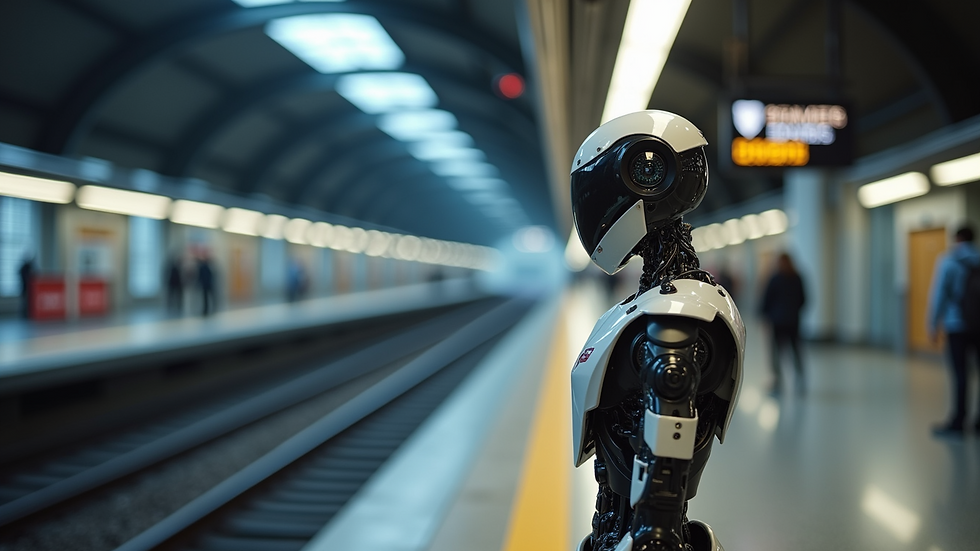
Humanoid robots equipped with AI add a new dimension to security patrols. Their human-like form allows them to interact with people, perform complex tasks, and navigate environments designed for humans. These robots can serve as mobile security officers, combining physical presence with advanced technology.
Interactive communication: Humanoid robots can greet visitors, verify identities, and provide instructions, improving security and customer experience.
Threat detection: Using AI-powered vision and audio sensors, they can identify suspicious behavior or objects and alert human supervisors.
Physical intervention: Some robots can perform basic physical tasks such as locking doors or activating alarms, supporting human security teams.
Companies like Jefwifi Robotics are developing humanoid robots that patrol corporate campuses and public spaces, demonstrating how these machines can reduce the need for human patrols in hazardous or monotonous environments.

Combining AI Drones and Humanoid Robots for Enhanced Security
The future of security patrols lies in integrating AI drones and humanoid robots into a coordinated system. Each technology complements the other’s strengths, creating a comprehensive security network.
Drones for aerial surveillance: Cover wide areas and provide overhead views.
Humanoids for ground-level interaction: Handle detailed inspections and human engagement.
Centralized AI control: Systems like those from Jefwifi Robotics use AI to coordinate drones and robots, sharing information and responding to incidents faster.
This combination allows security teams to monitor environments more thoroughly and respond to threats with greater precision. For instance, if a drone detects unusual activity on a rooftop, a humanoid robot can be dispatched to investigate on the ground, while security personnel receive live updates.
Practical Applications and Industry Examples
Several industries are already adopting AI drones and humanoid robots for security:
Industrial sites: Drones monitor large facilities, while humanoid robots patrol sensitive areas, reducing theft and vandalism.
Airports: Robots assist with passenger screening and patrol terminals, while drones oversee perimeter security.
Smart cities: Integrated AI patrols improve public safety by monitoring parks, streets, and public buildings.
Jefwifi Robotics has partnered with multiple organizations to deploy these systems, showing measurable improvements in security coverage and incident response times.

Challenges and Considerations
Despite their benefits, AI drones and humanoid robots face challenges:
Privacy concerns: Surveillance technologies must comply with privacy laws and respect individual rights.
Technical limitations: Battery life, weather conditions, and AI accuracy can affect performance.
Cost: Initial investment and maintenance can be significant, though costs are decreasing as technology advances.
Investors and business owners should evaluate these factors carefully. Working with experienced providers like Jefwifi Robotics ensures access to reliable, tested solutions that balance innovation with practical needs.


Comments